Showing posts with label Lists. Show all posts

Wednesday, July 31, 2013

Ranking the Paul Schrader Films I've Seen

Paul Schrader will most likely be best remembered as the screenwriter for three of Martin Scorsese’s best films – Taxi Driver (1976), Raging Bull (1980) and The Last Temptation of Christ (1988). But his career is obviously greater than those three films – from his fine screenplays of other director’s work like Rolling Thunder (1977) and Mosquito Coast (1986), along with his other screenplay for Scorsese – Bringing Out the Dead (1999). He has also directed 18 films – the latest being The Canyons – opening this week in theaters and on demand. While Schrader has never gotten quite the same praise for his directorial efforts as he has for those screenplays for Scorsese, his filmography is quite strong – and he certainly qualifies as an auteur. I titled this post the films of Paul Schrader that I have seen, because while I’ve only seen 11 of his directorial efforts and have missed 6 – Cat People (1982), Light of Day (1987), The Comfort of Strangers (1990), Witch Hunt (1994), Forever Mine (1999) and Adam Resurrected (2008). That’s a third of his filmography, so obviously I have some work to do to catch up. But on the eve of the release of his latest film, I thought I should take some time to acknowledge a fairly underrated filmography.

11. Dominion: Prequel to the Exorcist (2005)
The story of Schrader’s awkwardly titled Dominion: Prequel to the Exorcist is well known – the studio hired Schrader to make a Prequel to the famed horror movie – he did, and they hated it. They considered it too slow and ceberal, and not the horror movie they wanted, so they took the movie away from Schrader, jettisoned most of the footage, recast some roles, and gave the film to Renny Harlin, who made Exorcist: The Beginning. After spending millions on the two versions, and having it still in the red after Harlin’s film was done it’s theatrical run, the studio relented, and barely released Schrader’s version – in an effort to make a least little money off of it. I’ve now spent most of my space talking about the backstory to the movie rather than the movie itself – and there’s a reason for that. It just isn’t very good. I appreciate the fact that Schrader takes the premise seriously, which is probably what the studio didn’t like (but should have expected had they seen anything Schrader has ever done before), but the film is still dull, and rather unremarkable. Is it better than Harlin’s version? Yes, but not by that much, although they are very different films based on the same basic premise. If they were better movies, it would be fascinating to watch them back to back to see the differences. But they’re not, so both films have largely already been forgotten – and that’s probably for the best.

10. Touch (1997)
Strangely, although the film couldn’t be more different than Dominion, Touch suffers the same basic problem – that Schrader takes it a little too seriously. Here we have a movie based on an Elmore Leonard novel – with all of his trademark wit – that doesn’t really play like a comedy. Part of that is because it’s a bizarre novel by Leonard in the first place – instead of his usual criminals, Touch is about a strange young man (Skeet Ulrich) who has Stigmata – and the people who meet and try to exploit him. The film seems caught between the world of Leonard – in which this could be an amusing religious satire – and Schrader – who tries harder to take some of the questions of faith in the movie seriously, which I don’t think Leonard ever intended. This makes Touch a very odd movie – not successful really, but not boring either.

9. Patty Hearst (1988)
Patty Hearst is an odd film, but perhaps that is what this very odd story deserves. We all know the story of Heart – she was kidnapped by the Symbionese Liberation Army, really just an odd collection of misguided young people under the power of their leader, kept in a closet for weeks, and then ends up joining their “revolution” – even to the point of brandishing a machinegun at a bank robbery. Schrader’s film is clearly in sympathy with Hearst – he buys her story that she was essentially brainwashed into doing what she did, and the way Schrader presents it, you’d have a tough time arguing that. Yet what makes the film odd is that for such a sensational, unbelievable story, Schrader has made a subdued film – one that you could argue is dull. What isn’t dull is Miranda Richardson’s great performance as Hearst – which is remarkably subtle – so subtle in fact, at times she appears to be doing nothing. I’m not sure Patty Hearst is really a good film, but again, it’s an interesting one – and one you won’t likely forget.

8. The Walker (2007)
The Walker is the story of a man who everyone sees as frivolous and a failure when compared to his “great” father, who in reality, is a far greater, more moral person. It stars Woody Harrelson, in one of his best performances, as the son of a famous Senator, who really hasn’t done much with his life. He is gay and spends most of his time going on “dates” with the wives of powerful Washington men – accompanying them to parties or the theater, when their husbands are too busy to. And then, he becomes involved in a murder investigation because of one of those women, and then becomes the prime suspect. The film is more of a character study of Harrelson’s character than a murder mystery – but the murder mystery is necessary in order for us, and for Harrelson’s character himself, to see just who this character is. It isn’t one of Schrader’s best films – but it is a very good one, and it deserves to be seen by more people.

7. American Gigolo (1980)
American Gigolo is every inch a Paul Schrader with one major difference – the ending of this film is upbeat. This is another of what Schrader calls his “Man in a Room”  movies, this one involving Richard Gere, as a young gigolo who specializes in pleasing middle aged women. He’s very good at his job – and takes pride in it. While outwardly, he appears to be charming and likable, he really is another of Schrader’s lonely characters – craving human contact, and yet not quite sure how to get that legimately, so he hides behind his profession to get it. That is until he meets Lauren Hutton – as a Senator’s wife. Her character is not as well defined as perhaps she could be, but everything else in the movie – including the murder investigation (this is clearly a pre-cursor to films like Light Sleeper and The Walker) are handled well. Does the upbeat ending work? I’m not sure, but considering that Schrader usually ends his films on a down note, it is a welcome respite.

6. Light Sleeper (1992)
Light Sleeper is one of the saddest films about drug addiction you will ever see. It stars Willem Dafoe in an excellent performance as a former addict, now clean for a few years, who still works in the drug business – going to the home of his clients to drop off their fix. Why does he do this? After years of being an addict, what other job could he possibly get? He gets along with his boss, Susan Sarandon. Like The Walker, the film is a character study more than it is about it’s plot – and there is a plot, about an old flame of Dafoe’s, another drug addict, and her death – that Dafoe gets drawn into. Some will complain that the ending of the movie is basically the same ending as Schrader wrote for Taxi Driver. It’s not an unfair complaint, but the ending works for this film, as it did for the previous one. And, as I said, the movie isn’t about its plot – about these two people, Dafoe and Sarandon, their relationship, and the two performances couldn’t be better.

5. Auto Focus (2002)
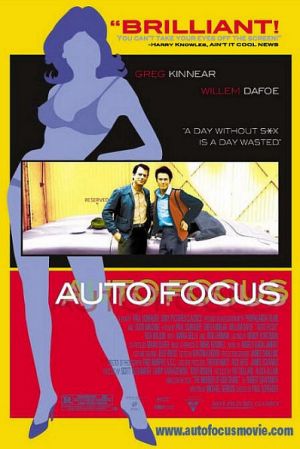
Auto Focus is a sad movie about sex addiction. It stars Greg Kinnear in a remarkable performance as Bob Crane – star of TV’s Hogan’s Heroes – whose career crashed and burned after the show went off the air, and then he descended into his own personal hell as a sex addict, before ended up being murdered by his running mate – played in an exceptionally creepy performance by Willem Dafoe. There is a lot of sex in Auto Focus, but no joy, not eroticism. Crane is famous, and finds getting women to sleep with him is easy. He and Dafoe’s character spend time in strip clubs and bars, and often film their exploits. Why? Why not? Some complained that Auto Focus was a shallow film, but that’s not accurate. It’s a remarkably

4. Blue Collar (1978)
In the same week that the city of Detroit declared bankruptcy, I find myself writing about Schrader’s debut film – Blue Collar – that takes place in Detroit, and shows just how corrupt were. It stars Richard Pryor, Harvey Keitel and Yapphet Kotto as three assembly line workers in the auto plants, who are essentially tired of being squeezed by both sides – management on one side, the union on the other – and decide to take matters into their own hands and rob the safe in the Union office – what they find is both more and less than what they expected. The film is brilliantly acted by the three leads – you expect that from actors like Keitel and Kotto, but it is really Pryor who is the star here – still at times funny, but not in the way we’re used to seeing him. This is a film full of anger, and the film does become violent, but as it goes along, it also becomes more morally complex –as the men have to decide what to do. You don’t hear much about Blue Collar anymore – it’s another of those great 1970s films that has been forgotten – but it’s worth tracking down. Right from his first directing effort, Schrader showed he was a fine filmmaker – and one willing to follow the story where it should go, and not the way Hollywood usually wants them to go.

3. Hardcore (1979)
After writing Taxi Driver for Scorsese and Rolling Thunder for John Flynn, I guess Schrader wanted to make a similar movie himself –and he does so in Hardcore, the most underrated film of his career, and one of the more personal ones. The film stars the great George C. Scott as a strict Calvinist (the same religion Schrader himself was raised in), who discovers his daughter has gotten involved in the porn industry – and heads to California to try and “rescue” her. Along the way, he meets a young prostitute – and the two bond. It’s there relationship that is really the heart of Hardcore – he is the one man who doesn’t just see her as a sex object, she gives him the freedom to open up in a way he never has before. The flaw in the movie is the ending – which is fairly standard issue stuff, even if it ends on a bittersweet moment. I almost think the film would have been better had Scott never found his daughter – and if he tried to make the most of it with his new “surrogate” daughter instead. Still, a flawed ending(that Schrader said in Film Comment recently he was forced to change) isn’t enough for me to not love Hardcore, which is a personal movie to me in other ways as well.

2. Affliction (1998)
Affliction is perhaps the most perfect film of Schrader’s career (not, obviously, in my opinion the best, but the least flawed). It stars Nick Nolte in his greatest performance as a lazy, alcoholic Sheriff who is still terrified of his abusive, alcoholic father – played in an Oscar winning performance by James Coburn. Affliction points to the types of roles Nolte, no longer a leading man, has excelled at in the last 15 years – flawed men, beaten down by life and their own demons, but men who despite outward apperances, and past behavior, are still decent. Like many of Schrader’s films, there is a murder in Affliction – one that snaps Nolte out of his slumber, but the movie isn’t about the murder - I can barely remember the details of the murder in this film. What I will never forget is the performances by Nolte and Coburn, one as a man still suffering from the effects of child abuse decades later, and one who is still a big, mean, petulant bully. Coburn said that this was the greatest role of his career – one of the few that actually required him to act. And act he does. Nolte probably should have won an Oscar for this performance as well (out of the nominees, he was probably the best). These two towering performances are at the heart of Schrader’s film – a great one.

1. Mishima: A Life in Four Chapters (1985)
 Mishima: A Life in Four Chapters is a completely unconventional film biography, but probably the only way to effectively tell the story of it’s title character – the famed Japanese writer Yukio Mishima, who in 1970, along with his private army, would storm an army base, take a General hostage, address the troops and the commit seppuku, all in an effort to restore the Emperor to power – something even the Emperor did not want. Schrader’s film tells Mishima’s life story in starkly different styles – black and white flashbacks, that show a sickly, overprotected child, who becomes a sexually confused body builder and writer, in highly stylized color sequences, shot on a sound stage, recreating the events of three of Schrader’s novels, and then in more natural color, depicting the last day of his life. Like Todd Haynes’ Bob Dylan biopic I’m Not There (2007), Schrader doesn’t want to make a standard issue biopic, but wants to explore the different aspects of Mishima’s character – although this time, I do think it adds up to a coherent whole, unlike Haynes’ film, where not adding up to a coherent whole is part of the point. You’re on dangerous ground when you try too hard to make an artist’s work reflect who they are as a person, which Schrader does here, but the overall effect works remarkably well. Schrader himself considers this his best directorial effort – and I agree wholeheartedly.

Friday, June 28, 2013

Half Time Top 10: The Best Films of the First Half of 2013

Every year, at the end of June, I do a Half Time Top 10 List for the first six months of the year. So far, 2013 has been a pretty good year – and I hope it gets even better. Of course, there are many films that I WANT to see that either haven’t opened in my area yet or else I missed. So before I get to the end of the year, I want to ensure I see the following films, already released: At Any Price, The Attack, Dead Man’s Burden, Dirty Wars, The East, A Hijacking, Hors Satan, I’m So Excited, In the House, The Kings of Summer, Leviathan, Paradise: Love, Post Tenebras Lux, Reality, Renoir, Simon Killer, Something in the Air, 20 Feet For Stardom, The Unspeakable Act, We Steal Secrets: The Story of Wikileaks, What Maisie Knew, and Wish You Were Here.

As always, I don’t worry too much about this one – it’s mainly for fun, so placement isn’t as important as it is at the end of the year. Anyway, I think the top two films will definitely be on my top 10 list at the end of the year – the rest, I’m not as sure of. But all are fine films, and none are HUGE hits, so they deserve your attention.

Before I get to the runners-up and the top 10, let me point out one more thing. Sarah Polley’s excellent documentary Stories We Tell would be on the top 10 list – had I not included it in last year’s ranking when it was released here in Canada. Joshua Oppenheimer’s excellent documentary The Act of Killing would also clearly be in the top 10 – but it has not been released yet (I saw it at TIFF last year), so I didn’t include it. Tomas Vinterberg’s The Hunt, which I also saw at TIFF, may have made the top 10, but again, it has not been released yet. And although it did make Indiewire’s Survey of the best 50 films of 2013 so far, I consider the great Neighboring Sounds to be a 2012 film, even if I didn’t see it until March.

Runners-Up: Behind the Candelabra (Steven Soderbergh) may well have been in the top 10, except it’s a TV movie, which normally I do not include at all – but it really is a great biopic of Liberace, with two excellent performances by Michael Douglas and Matt Damon. Fill the Void (Rama Burshtein) is an uncommonly thoughtful, beautiful film about a young woman for an Orthodox Jewish community in Israel who is being pressured into marrying her sister’s widow. Lore (Cate Shortland) was an interesting, beautiful well acted movie about a the children of Nazis travelling across Germany as the Allies move in. Monsters University (Don Scanlon) may not be vintage Pixar, but it is still very good Pixar and the best family entertainment so far this year. Much Ado About Nothing (Joss Whedon) makes the Shakespeare masterpiece feel fresh and new again in modern day AmericaThe Place Beyond the Pines (Derek Cianfrance) was an epic, three part father-son crime drama, with another great Ryan Gosling performance. Sightseers (Ben Wheatley) was an insane, pitch black comedy about two seemingly normal people who morph into serial on holiday.Star Trek: Into Darkness (JJ Abrahms) is the year’s best blockbuster so far – balancing a good story, characters and spectacle quite well. Sun Don’t Shine (Amy Seimetz), This is the End (Seth Rogen & Evan Goldberg) was the most fun I had at the movies so far this year as a group of Hollywood actors, playing themselves, face the Apocalypse. To the Wonder (Terrence Malick) is undoubtedly the weakest film of the master director’s career – but still one of the most gorgeous films of the year so far. The We and the I (Michel Gondry) was a toned down film by Gondry about teenagers, and how they’re different in a group than by themselves.

Top 10

10. Pain & Gain (Michael Bay)
Believe me when I say that no one is more surprised than I am that a Michael Bay film made this top 10 list, and a Terrence Malick did not. However, that’s what happens when Bay delivers far and away his best film, and Malick makes his weakest. This may not be the small character study Bay said it would be, but this wonderfully dark, violent comedy that borders on offensive for nearly its entire running time is Bay at his best. The film is about three idiot bodybuilders who want their piece of the American Dream – and do horrible things to get it. The film actually fits in very well with two other films on this list (see 8 and 3) as a portrait of idiot Americans, entitlement and consumerism run rampant. It is also marvelously entertaining and contains the best performance ever by The Rock. If another filmmaker made this, no one would have questioned if they were making a satire (the movie could have made an excellent, albeit very different, Coen Brothers movie). Bay has always had talent, although he’s mainly wasted it on one shitty movie after another – but with Pain & Gain he found the perfect movie for him – and delivered the best film he has ever made (and considering his next film is Transformers 4, probably ever will). For this one movie only, count me as a Bay fan.

9. Stoker (Park Chan-wook)
Korean auteur Park Chan-wook’s American debut didn’t catch on at the box office this spring, which is a shame, because although it’s not as good as Oldboy, this is still a stylish, Hitchcockian thriller, with great performances by Mia Washikowska as a disturbed teenage girl, Matthew Goode as her even more disturbed uncle, and Nicole Kidman, adding another horrible mother to her resume. The film is all about style, and Park has a lot of fun playing with the audience, especially in a few of the murder scenes, and a shower scene that starts out disturbing, and gets even more so when you realize what exactly is going on. The best pure thriller of the year so far.

8. The Bling Ring (Sofia Coppola)
Sofia Coppola’s latest is another study of spoiled rich kids – like in a sense all her films are. And yet writing it off as her repeating herself would ignore the fact that each of her films are markedly different in the lives they explore. Here, she focuses on a group of rich teens in L.A. who rob the house of celebrities when they’re not around – they already have everything they could want – but they want what they don’t have – fame. The characters start out almost interchangeable, but take on added dimensions as the film moves along. Emma Watson should be (but probably won’t) in the conversation for a Best Supporting Actress Oscar for her spot on performance as one the teens, who has absolutely no self-awareness. I’m getting tired of people bashing Coppola for having a famous father – she has more than proven herself over the past decade and a half – and The Bling Ring ranks as one of her best.

7. Beyond the Hills (Cristian Mungiu)
Cristian Mungiu’s Beyond the Hills is probably a more complex film than his Palme D’or winning 4 Months, 3 Weeks and 2 Days, but less immediately satisfying. Once again, the movie is about two female friends, but this time, everything is a little bit messier. Both girls were raised in a Romanian orphanage – and were best friends (and it’s hinted at, perhaps more) – but have gone separate ways since leaving – one leaving the country in search of employment, one into a convent to become a nun. The friend who left comes back, to try and convince her friend to leave, and sets into motion a horrible sequence of events, in which neither woman – nor the well-meaning convent – is fully to blame, yet still ends in tragedy. Mungiu’s film unfolds slowly and methodically and contains two top notch performances (which shared the best actress prize at last year’s Cannes film festival) by Cosmina Stratan and Cristina Flutur). The film is based upon a famous, sensational case in Romania, but Mungiu strips away the bombast, and tells a simple story – one that has no real answers. Mungiu continues to be one of the most interesting filmmakers in the world right now.

6. Room 237 (Rodney Ascher)
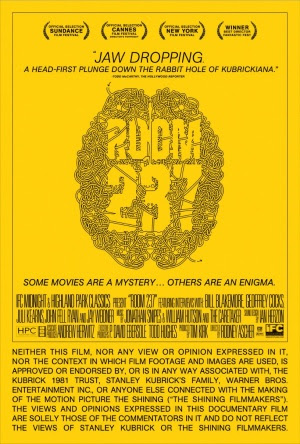
I know some critics hated Room 237 – as they felt that director Rodney Ascher was mocking them. I didn’t feel that way, even though the movie really is about the folly of reading too much into movies. The different perspectives on Stanley Kubrick’s The Shining on display in the movie range from semi-plausible, to batshit insane, and yet as you’re watching the movie, and Ascher slows down or freezes frames on certain spots of The Shining as the obsessive of the moment prattles on, you find yourself almost believing the crap they’re trying to sell you. The Shining is the perfect movie for this sort of treatment – it’s Kubrick, so everyone knows he was a “perfectionist”, which means every little thing must be the sign of something bigger, and it’s also Kubrick doing horror – a genre piece, which he wasn’t really known for. Why did he do that? Well obviously, it was to talk about the Holocaust/genocide of Native Americans/or admit that he faked the moon landing. Room 237 is a movie for movie lovers – you may think the people in the movie are batshit crazy – for the most part, I did – but you also may see a little of yourself in them.

5. Frances Ha (Noah Baumbach)
I’m not sure any film so far this year made me feel as good as Noah Baumbach’s Frances Ha. Co-written and starring the intelligent, funny, adorable Greta Gerwig as a would be dancer in New York, who during the course of the movie has to come to terms with two very difficult things – the first being, she is never going to be a great dancer, and the second being her best friend from college is going to marry her lunk-headed stock broker boyfriend, even though she’s miserable with him much of the time, and he likes to come in her face. That may not sound like the setup for a buoyant, intelligent, whip smart comedy – but in the capable hands of Baumbach and Gerwig, it is. Even when Gerwig’s Frances frustrates us because she cannot see what is painfully clear to us; she is still never less than lovable, and completely real. Gerwig has flirted with stardom ever since Baumbach casted her in his last film Greenberg (where she stole the movie from star Ben Stiller – which is hard because Stiller was also great in the film), but this really should be her star making role. As a film, Baumbach is equally inspired by Truffaut and Woody Allen, and he’s made his optimistic, enjoyable film yet. This one will leave you smiling.
 

4. Mud (Jeff Nichols)
The indie hit of the year so far, is Jeff Nichols third film – an excellent follow-up to Shotgun Stories and Take Shelter (although Take Shelter remains his best). The film is about two boys who live alongside the river in the South – and find a strange man named Mud (Matthew McConaughey) on an island – and even though he has a gun, and a dark past, decide to help him. Mud is the best kind of coming-of-age story, as it nails the lives of these two boys on the cusp of being a teenager – not immature children, but still haven’t become cynical like many adults. The film is almost a dark fairy tale – even though Nichols ground the film in the realism of everyday life in the South. McConaughey continues his excellent string of performances with another great one in the title role – and Reese Witherspoon is excellent in support, as is Nichols’ favorite Michael Shannon in a small role. The film is well written and directed by Nichols, who continues his run as one of the most interesting young filmmakers working in American right now.

3. Spring Breakers (Harmony Korine)
While I’ve always admired indie provocateur Harmony Korine for making precisely the movies he wants to make, until Spring Breakers, I cannot honestly say I’ve actually liked one of his movies (with the exception of Kids – which he wrote, not directed). But with Spring Breakers, Korine has made far and away his best film yet – and the ballsiest, in your face, provocative film of the year so far. Is Korine celebrating these characters and their empty lives, satirizing it, or decrying it? Why not all three? Korine embraces the contradictions in the movie – both in terms of how it perceives its characters, and the visuals – going for MTV style gyrating, to the most artful tracking shot of the year (staying inside the car with one character as they slowly drive by the chicken shack, as two others rob it), to even its stance on race. James Franco delivers the best performance of his career as Alien – the rapping drug dealer who bails the girls out, and seduces them – even though he has no idea what he’s getting himself into. But the four girls – Selena Gomez, Ashley Bensen, Vanessa Hudgens and Rachel Korine – are also great, and deserved more praise then they got. Spring Breakers is one of the must see films of 2013 – you may love it, you may hate, but you won’t forget it.

2. Before Midnight (Richard Linklater)
Back in 2004, I didn’t think Before Sunset was the masterpiece many did – I loved the film, but like the first in the series, Before Sunrise, it struck me more as a fantasy than anything else – the characters were older, wiser and more miserable, and Linklater didn’t make it as dreamily romantic as the first film, but it was just as much of a fantasy – this time, that you could go back to a prior love and everything would be fine. But Before Midnight is every bit the masterwork critics have proclaimed – and it has made the first two films better with its inclusion (you won't be able to look at those two films in quite the same way again). Why is this the best in the series? Because for the first time, it is not a fantasy. Jesse and Celine have spent the last 9 years living together – so instead of being the object of each other’s perfect fantasy lives, they are now all too real to each other. This film is more mature about relationships than the previous two – and the fight that makes up most of the last third of the film is perhaps the more realistic martial fight I have ever seen in a movie (be careful seeing this with your spouse – it may drag up things you don’t want drug up). Ethan Hawke and Julie Delphy are amazing in the film, and Linklater’s direction is perfect. I can almost guarantee this will be on my end of year top 10 list.

1. Upstream Color (Shane Carruth)
With his 2004 film Primer, Shane Carruth established himself as an uncommonly intelligent writer/director as he took his time travel premise seriously, and made one of the best science fiction movies of the decade – with almost no money. It took him 9 years to make a follow-up – but Upstream Color was worth the wait. Once again, his film has science fiction elements – including a very strange worm, and pig farmer who conducts experiments. But the film is much more than that – it is really about two shattered people trying hard to put the pieces of their lives back together – while trying to figure out what the hell happened in the first place. The best performance I saw in the first half of the year belongs to Amy Seimetz, who plays the lead here. You could say her story is in the classic “rape-revenge” model, but that wouldn’t be doing it justice. As for Carruth, he has gotten even better as a writer – constructing the year’s most complex screenplay, with its jumps in time, and as a director – the film certainly recalls the style of Terrence Malick, even while his the content of the film recalls David Cronenberg. Upstream Color is a movie you have to let wash over you – don’t try to piece it together your first time through – that really isn’t the point anyway. But this is the best film of the year so far – by far – and given how much I love #2 and #3 on this list, that’s saying something.

Thursday, May 30, 2013

Los Angeles vs. Chicago

Please excuse me while I indulge in my other passion other than movies – hockey. Specifically, the Los Angeles Kings. As you know, the Kings won the Stanley Cup this year, and back in the Conference Finals this year against Chicago (and if you don’t know – shame on you!). They will be taking on the Chicago Blackhawks for the chance to go back the Stanley Cup Final. You’d be hard pressed to find two cities that more movies have been set in (not counting New York obviously – and since BOTH of their teams lost, screw them), I thought I’d do a comparison of 10 movies – one for Los Angeles and one for Chicago to see who comes out on top. By using this very scientific method, I think we can safely assume whatever city comes out on top will also win the series. And hopefully, I can do a post comparing Los Angeles to Boston next round (god help me if it’s Pittsburgh). Anyway, I’ve broken down the films by category – with Los Angeles coming first and Chicago second (they are the Second City after all).

1. Classic Film Noir
Sunset Blvd (Billy Wilder, 1950) vs. Call Northside 777 (Henry Hathaway, 1948)
Billy Wilder’s Sunset Blvd. is one of the greatest films ever made. A cynical look at the industry that dominates their city and how it uses people up, and how delusional people get as a result. A dark, mysterious, brilliantly written, directed and acted movie. Call Northside 777 is – well, it’s okay. It has Jimmy Stewart as a reporter looking into an old murder case – and hey, it was actually filmed in Chicago. That’s something I guess.
Advantage: Los Angeles

2. Michael Mann
Heat (1995) vs. Public Enemies (2009)
Michael Mann is one of the best action directors in the world today. His male characters are defined by their jobs – and take no nonsense. And his female characters – well, they kind of fade into the background. So a point goes to Public Enemies for Marion Cottilard, perhaps the best female performance in any Mann film. But that’s the only way Public Enemies is superior to Heat – which had multiple amazing action sequences, and the first onscreen pairing of DeNiro and Pacino – in one of the best scenes of all time. I love Public Enemies, but this isn’t even close.
Advantage: Los Angeles.

3. Robert Altman
Short Cuts (1993) vs. The Company (2003)
Robert Altman is one of the best director of all time. His Short Cuts is an epic masterpiece, combing multiple stories from Raymond Carver into a rich tapestry of L.A. at its very best and very worst. You could easily make the case that it is the quintessential L.A. movie. The Company is about ballet – and although it has its champions, has largely been forgotten by most. Yes, I liked Neve Campbell in the movie, and it’s a fine film in its own right. No, it’s nowhere near as good as Short Cuts.
Advantage: Los Angeles.

4. Throwbacks to Previous Decades
L.A. Confidential (Curtis Hanson, 1997) vs. The Untouchables (Brian DePalma, 1987)
Both of these films look back at their cities and movie history. Curtis Hanson’s brilliant L.A. Confidential is like a 1940s film noir – full of corruption, greed, lust, violence and murder – and features a brilliant cast led by Russell Crowe, Kevin Spacey, Guy Pearce and Kim Basinger. Brian DePalma’s The Untouchables wants to be a 1930s gangster movie – and does feature a great turn by Sean Connery, and I do love Robert DeNiro’s scenery chewing. Both are excellent – but L.A. Confidential is clearly better.
Advantage: Los Angeles.

5. “Existential Crime Movies”
Drive (Nicholas Winding Refn, 2011) vs. Thief (Michael Mann, 1981)
I never quite believed that Drive was an “existential” crime thriller like so many believed (nor Thief for that matter, but seemed to be the consensus when Drive was released in 2011), but there is no doubt that visually at least, it owes a great deal to Michael Mann – and the lead characters in the film are similar (though certainly not the same). As stated above, I loved Michael Mann – and Thief is one of his best films. Yet, Drive is even better – more stylish, more violent, it has a gorgeous Carey Mulligan, Ryan Gosling at his silent best (not to mention the coolest jacket ever)and best of all Albert Brooks as an Albert Brooks-like psychopath. Thief is great – Drive is better.
Advantage: Los Angeles

6. Comedies Best When Stoned/Drunk
The Big Lebowski (Joel & Ethan Coen, 1998) vs. The Blues Brothers (John Landis, 1980)
The Big Lebowski is not the Coen’s best movie – but it is certainly the funniest. Jeff Bridges should have won an Oscar for his now iconic performance as the Dude. John Goodman is hilariously over the top, Steve Buscemi gloriously dumb, John Turturro wonderfully creepy and Sam Elliot the best narrator in memory. The Blues Brothers is fun – and at the center of John Belushi’s legacy – and may be good for Kings fans to watch this series, since they destroy Chicago in it. Still, The Big Lebowski is much, much better.
Advantage: Los Angeles

7. Families in Crisis
Killer of Sheep (Charles Burnett, 1977) vs. Ordinary People (Robert Redford, 1980)
Robert Redford’s Ordinary People won the Oscar for Best Picture way back in 1980 (beating Raging Bull – for shame!). it’s actually a very good movie that has been forgotten by too many people – it’s depiction of the Chicago suburbs seeming perfection masking deeper pain is quite good. Still, compare that to Charles Burnett’s brilliant 1977 student film Killer of Sheep, that didn’t get an official release for decades because of music rights issues. The family at the heart of that movie is poor, and struggle to make ends meet day to day, and still have a better bond that the rich WASPS in Ordinary People. Watch them back to back and tell me which family comes across whinier.
Advantage: Los Angeles.

8. 1970s Crime Films
Chinatown (Roman Polanski, 1974) vs. The Sting (George Roy Hill, 1973)
Polanski’s movie is one of the great neo-noirs ever made, with a brilliant screenplay by Robert Towne, Jack Nicholson, Faye Dunaway and John Huston at their best, the best nose slicing scene in movie history and a killer ending. The Sting is a fun, forgettable conman movie that somehow won the Best Picture Oscar. I really don’t need to say anything else.
Advantage Los Angeles.

9. Brian DePalma
Body Double (1984) vs. The Fury (1978)
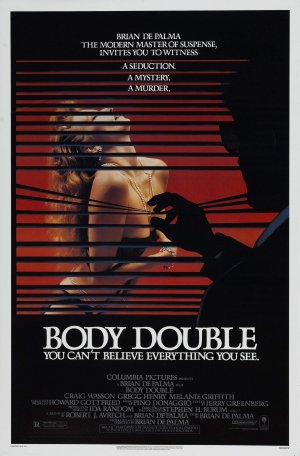
Body Double is an excellent homage to Hitchcock’s Rear Window – a nifty, nasty little film that also features Melanie Griffth (who was hot at the time) as a porn star in an unforgettable role. The Fury has John Cassavetes exploding head. Now, as exploding head scenes go, it’s pretty good. But it’s no Scanners.
Advantage: Los Angeles.

10. “Romantic Comedies for Guys”
Punch-Drunk Love (Paul Thomas Anderson, 2002) vs. High Fidelity (Stephen Frears, 2000)
Both of these films outwardly look like typical romantic comedies – but both have a much more masculine sensibility than most in the genre. In Punch-Drunk Love, Anderson brilliantly deconstructs Adam Sandler’s onscreen personality – meaning it’s the one movie that acknowledges that he always plays an anti-social psycho – but even he finds love. In High Fidelity, John Cusack talks a lot about his past loves and pop music. I love both of these films – still, it’s not much of a contest, is it?
Advantage: Los Angeles.

So, there you have it – a perfect 10-0 record for L.A. over Chicago. Now, I’m sure that some will disagree with some of my choices here (they’re wrong), and some will say I should have picked different Chicago movies – The Fugitive, Risky Business, Hoop Dreams, The Interrupters, Chicago, Eight Men Out, Dick Tracy, Medium Cool, Mickey One,  Road to Perdition, Ferris Bueller’s Day Off (even though one of the main characters there has the good sense to be a Red Wings fan) and that I stacked the deck too heavily in L.A.’s favor and didn’t play fair – but screw those people. Go Kings Go!

The Top 10 Performances by Woody Harrelson

Woody Harrelson has always been one of my favorite actors – even though he seemingly disappears from the movies for a couple years at a stretch quite often. He’s one of those guys who can fit in no matter what kind of movie you’re making – absurd comedy or dark drama, and everything in between. He’ll be in Now You See Me this week, so I thought I’d look back at by 10 favorite Woody Harrelson performances.

10. Game Change (Jay Roach, 2012)
When Game Change debuted on HBO last year, most of the talk (rightly) centered on Julianne Moore’s performance as Sarah Palin. Moore pulled off the near impossible in showing just how dangerously incompetent Palin was to be Vice President, let alone President, and yet still made her a fully rounded person, who even generates sympathy from the audience – there is a reason why Moore won a bunch of awards for her performance. But Harrelson’s role is really the central one in the movie – he plays Steven Schmidt, the McCain adviser who wanted Palin in the first place, and then watches slowly as she melts down, and he realizes just how bad a candidate she is and yet what a brilliant actress she could be. Harrelson does not have the well-known personality or vocal mannerisms to fall back on, like Moore and Ed Harris (who played McCain) did. His role is tricky, and he pulls it off brilliantly – right up until the final moments. A great performance by Harrelson here.

9. No Country for Old Men (Joel & Ethan Coen, 2007)
There is no question about it – compared to the performances in this movie by Josh Brolin, Tommy Lee Jones, Javier Bardem and even Kelly McDonald, Woody Harrelson’s role pales. And yet, Harrelson is just about perfect in his few brief scenes as Carson Wells – another hit man who is on the trail of Josh Brolin and his stolen money, as well as Javier Bardem’s even more brutal hit man. In many ways, Wells is a mere misdirection in Cormac McCarthy’s novel, and the film based on it – he comes in, is confident, knows Chigruh, and we think we’re being setup for some sort of epic confrontation, only to have him dispatched rather quickly and easily. That’s a brilliant move – but in many instances it would mean the actor playing the role has a thankless task. But Harrelson makes the most of his few scenes – creates a very specific character out of him. No, he isn’t the best in this movie – not even close because he’s not given the role for it – that doesn’t mean he isn’t just about perfect in the film anyway.

8. White Men Can’t Jump (Ron Shelton, 1992)
Ron Shelton directed two great sports comedies in the late 1980s/early 1990s – the more famous of which is Bull Durham, but the better of which is White Men Can’t Jump. This is a film that gave Harrelson his first great movie role, and he excels in it. He plays a basketball hustler, who knows that simply by looking like he does, no one will take him seriously - making it all the better when he beats them. Harrelson has great chemistry with the other two major characters in the movie – Wesley Snipes (yes, there was a time where he could act), as another hustler who he teams up with, and Rosie Perez as his whip smart, sexy, funny firecracker of a girlfriend. The film is profane in the extreme – but is creative with its profanity – and Harrelson nails it.

7. Zombieland (Ruben Fleischer, 2009)
Woody Harrelson has a gift for playing eccentric characters – and his role in Zombieland, as Tallahassee, the Twinkie and Bill Murray loving guy who relishes killing zombies in creative ways is one of his best. While Jessie Eisenberg is certainly the star of the show here, Harrelson gets the film’s plum supporting role – and he makes the most of it. Many actors would look lost, or simply seem out of place, but not Harrelson who nails the tone between comedy and horror pretty much perfectly. Harrelson has had tougher roles – and obviously delivered better performances, but I’m not sure he’s ever been this much fun to watch in a movie.

6. The Walker (Paul Schrader, 2007)
Not many people saw Paul Schrader’s The Walker from a while back, but they should have if for no other reason than to see Harrelson’s excellent performance in the lead role. He plays Carter Page III, the son of a famous congressman who took on Richard Nixon during Watergate, and is still admired in Washington. By comparison, the younger Carter hasn’t done much with his life – he is rich and gay, and spends his days escorting the wives of politicians to social events when their husbands are too busy. And then, Carter becomes involved in a murder he did not commit, but looks like he did. This is a prototypical Schrader movie – similar in many ways to American Gigolo (1980), but to me, a better, more complete film. It is a murder mystery and a quietly moving character study. And Harrelson absolutely nails the leading role.

5. The Thin Red Line (Terrence Malick, 1998)
I have no idea how much of Harrelson’s performance in The Thin Red Line ended up on the cutting room floor. Malick is infamous for cutting actor’s either out of the movie completely or turning major roles into what amounts to a cameo appearance – which may well be what happened to Harrelson, who only has a few minutes of screen time in Malick’s WWII masterpiece. Yet who can forget those few minutes by Harrelson – who has perhaps the most memorable scene in the entire movie gets a chance to have the film’s most tragic and accidental death sequence – and one that hits hard. Harrelson does so much in that one scene that even though that’s pretty much all he does in this film; it still remains one of the most stunning performances of his career.

4. Rampart (Oren Moverman, 2011)
Harrelson’s character in Rampart is the most amoral character Harrelson has ever played – and really one of the most amoral characters I have ever seen at the heart of a movie. He plays an LAPD officer who is involved in the Rampart scandal of the late 1990s – but he seems even worse than most of the officer in that scandal. He is racist and misogynistic, has two kids, by separate mothers (who happen to be sisters and live next door to each other), but doesn’t seem to care too much about them either. He is violent in the extreme – he is filmed beating a suspect with such expertise, it cannot possibly be the first time he’s done it. He makes enemies where ever he goes – and yet somehow, he always seems to be able to escape. Rampart is not a movie with a typical plot – it does not show this man’s descent into corruption – he’s rotten to the core at the beginning of the film, and he’s not really any better or worse at the end. It is a great performance in a movie that deserves more attention.

3. The Messenger (Oren Moverman, 2009)
Harrelson earned his second Oscar nomination for his excellent performance in The Messenger. He plays a career military man who was simply the wrong age to ever see any combat. His job now is to go to the homes of the families of soldiers killed in Iraq and Afghanistan and break the news to them. He has a new recruit – played by Ben Foster, subtly for once – and is showing him the ropes. He advises to not get involved – don’t touch or hug the families, just deliver the news and then get out as fast as you can. This may sound heartless, but Harrelson’s character is hardly uncaring. He is struggling with his own demons and feels tremendous guilt – he just knows what the family needs, and what he needs. This is a quiet movie – but a powerful one. And Harrelson is one of the best things in it.

2. The People vs. Larry Flynt (Milos Forman, 1996)
I’m not sure what it was that Milos Forman saw in Harrelson to make him cast him as famed pornographer Larry Flynt in his excellent biopic – but I’m glad he did. Harrelson got his first Oscar nomination for this role – and he damn well should have won (he lost to Geoffrey Rush for Shine – a fine performance to be sure, but not a great one like Harrelson’s). Harrelson plays Flynt as a fun loving scumbag – he knows his Hustler magazine is vulgar, and he doesn’t care – it makes money. Harrelson is wonderful as she shows Flynt’s evolution from moonshiner to strip club owner to fledgling provocateur into publishing giant – all with the help of his loyal wife (Courtney Love, who showed here she is a real actress – and sadly, has yet to be able to do the same since). Harrelson fully embraces the chaos and contradictions in the role – and delivers one of his very best performances.

1. Natural Born Killers (Oliver Stone, 1994)
In 1994, casting Harrelson as a psychopathic spree killer in lover struck many people as odd – after all, at this point, he was pretty much known only as lovable doofus Woody Boyd from Cheers. But Oliver Stone saw the darkness in Harrelson lurking beneath the surface. As Mickey Knox, Harrelson was given the best role of his career – and delivered a tour-de-force performance. He is likable, charming, funny, creepy, scary and violent – often at the same time. The best part of his performance in undeniably the interview he gives with Robert Downey Jr.’s Geraldo like journalist (modeled after interviews with Charles Manson) – which Harrelson nails. But the entirety of his performance is brilliant. The movie was too violent and too controversial to gain any awards traction – but Harrelson deserved an Oscar for his role here. Maybe one day, he’ll get one.

Friday, May 24, 2013

Ranking Richard Linklater

For the past 22 years, since his 1991 breakthrough Slacker, Richard Linklater has been one of the most interesting filmmakers working in American indies. Yes, he has certainly flirted with bigger movies for studios – and actually made a couple of very good ones – but he always come back to his indie roots. Before Midnight opens this week – not in Canada, so I’ll have to wait a while to see it. So in lieu of that, I figured now was the time to look back at his 14 features (for those who are curious, I’m not counting his work before Slacker – one short, and two longer films, another short he made in the 2003, a TV movie from 2004, a documentary from 2008, or the TV series he directs – Up to Speed – just his theatrically released work). Anyway, it’s a strong resume, although I do think it is missing one thing – a true masterpiece, because for all the great, interesting work Linklater has done, he still hasn’t quite made one of them yet.

14. The Newton Boys (1998)
The Newton Boys was Linklater’s first attempt to go mainstream, and quite easily the worst film of his career. It stars Matthew McConaughey, Ethan Hawke, Skeet Ulrich and Vincent D’Onofrio as the title brothers, who along with Dwight Yoakam, robbed some 200 banks in the 1920s, made a lot of money, and never killed anyone, except one of their own. This is because they work mainly at night and blow the safes, and make out with the money. There is a reason why The Newton Boys aren’t as famous as some of the bank robbers that came just after them – John Dillinger or Bonnie & Clyde – and judging on this film the reason is simple – they were boring. There’s no romance about them, they are strictly professional criminals, very good at their job, who can seemingly talk about nothing except what they do. The film is slow – painfully slow – and Linklater isn’t much of an action director in the few cases where it is called for. Unlike his other films, he doesn’t seem to care about his characters, or what they are saying, so you have to wonder why the hell you should.

13. Bad News Bears (2005)
I don’t really dislike Linklater’s remake of Bad News Bears – it is about as good as the original, which was an average sports movie with a fine performance by Walter Matthau. This is an average sports with a fine performance by Billy Bob Thornton, who isn’t lovably vulgar like that Matthau was, but just plain vulgar – and it must be said, pretty damn funny too. In fact, Thornton is really the ONLY reason to see the movie – and even then, you’re better off watching Bad Santa, where he plays a similar role in a much better film, that truly allows him to be vulgar, which this one doesn’t because it wanted a PG-13 rating. Bad New Bears is a mildly amusing time waster – nothing more – and I have trouble believing that Linklater really directed it. He can make a great studio comedy – see the wonderful School of Rock – but this time everyone seems to be going through the motions.

12. Me and Orson Welles (2008)
Christian McKay, who plays Orson Welles in this film, may just give the best performance of anyone in a Richard Linklater movie (certainly only Jack Black in Bernie and Ethan Hawke in Tape can compare). He fully embodies the famed director/actor as he stages what will become his infamous stage version of Julius Caesar, with Nazis, a few years before he went on to reinvent film with Citizen Kane. It is a magnetic performance, where you can never take your eyes off of him. He looks and sounds as much like Welles as you could possibly expect, and captures the gravitas that Welles had that so few others did. It is a brilliant performance. And the movie is also a showcase for period costumes and set design, done on a shoestring compared to most period movies. So why then does Me and Orson Welles rank only 12th for me among Linklater’s films? Simple – I wasn’t all that interested in the “Me” part. Zac Efron plays that title character, and is fine as a youngster who has bit part in the stage, and tells the story, and also has a romance with an older woman (Claire Danes). All is well enough handled, but rather perfunctory as well. I wanted more McKay and Welles – a supporting character in the movie, but the only one you really remember as you leave the theater.

11. Fast Food Nation (2006)
Fast Food Nation is a fine film that tells three interlocking stories about how America slaughters and consumes meet. One story involves Greg Kinnear as a fast food executive who is tasked with finding out if there really is shit in their meet. He does not like what he discovers – especially when he meets with one of the biggest suppliers (Bruce Willis) who matter of factly tells him it doesn’t matter – the germs are killed by cooking the burgers, and besides, sometimes we all gotta eat shit. The second is about undocumented Mexican workers who come to America and end up being cheap, illegal labor at the factories that package the meet. Americans don’t want the jobs, so they do it, and companies like it because they save money and if a worker gets hurt, what can they do about it? The third is about fast food employees themselves, who don’t much like their job, and at some point decide to do something about it – although what they do doesn’t really accomplish anything. Fast Food Nation certainly has a point of view about meet – but it doesn’t really drill into your skull, but rather sits back and allows you to watch everything that happens. The ending of the movie – where we see a cow being slaughtered in the factory from beginning to end, is stomach churning, but I guess if you’re going to eat meet (and I’m not going to stop), you should at least know how it got to your table.

10. subUrbia (1996)
The oddly capitalized subUrbia was written by Eric Bogosian, a gifted playwright adapting his own work for the screen. For whatever reason, this movie never really seemed to catch on with audiences, and all these years later, I still don’t think it has ever really found its audience – and that’s too bad. While it may not be as good as Linklater’s best work, it is still fine indeed. The film, I think, makes an interesting companion piece to Dazed and Confused – which is about high school grads who don’t know what to do with their lives – as the characters in this film are older, but no wiser, and still don’t know what to do with their lives. All they do is hang out in the parking lot of a convenience store, drinking beer and waiting – but there is nothing to wait for. True, during the course of the night that makes up this film, they are actually waiting for a former high school friend, who has become a rock star (and he does show up), but even if they weren’t waiting for him, these characters would still be there, drinking, waiting, arguing with the Pakistani owners of the store (who see them more clearly than they see themselves). And perhaps that is why subUrbia still seems like it’s waiting to find its audience – while there are moments that are funny, this ends up being a fairly dark film, about the emptiness of the lives of these slackers. Unlike some movies (like say Kevin Smith’s), there is nothing romantic about these slackers – they’re kind of pathetic, and you feel sorry for them.

9. Slacker (1991)
Linklater’s breakthrough film was this free association film about life in his hometown of Austin, Texas. In it, we see what Linklater will do best throughout his entire career – listen to interesting people as they do nothing but talk and talk and talk. The film all takes places in seemingly real time, as Linklater’s camera finds a character and follows them for a while, as they ramble on about nothing overly important, until Linklater gets bored with them, and then spins off, finds another person on the street and follows them for a while. Linklater does this better later in his career (especially in Waking Life, but also in the Before Sunrise/Sunset films, although of course, there you don’t spin away) and Slacker certainly feels like exactly what it is – a young filmmaker experimenting with style and finding his voice. On that level, Slacker is a must for Linklater fans, much like the first films of many great directors are – not because they are the best work the filmmaker will do (Slacker clearly isn’t) but because we see the seeds of greatness in the film all the more clearly once we know what comes after.

8. Before Sunrise (1995)
Of the two “Before” films so far, Before Sunrise is the more dreamily romantic – because, of course, the characters at this point are in their 20s, and still see the world and their lives with endless optimism. They haven’t quite been crushed by life yet, haven’t settled down and “become their parents”. Instead, they are two young, intelligent 20-somethings who meet cute on a train in Austria, and decide to spend the long night together in Vienna – walking around and talking – before Jesse (Ethan Hawke) has to board a plane back to America and Celine (Julie Delphy) has to return to her life in Paris. Watching them walk around the streets of Vienna and talk – about everything and nothing – is a wonderful experience. You almost wish there was no sequel, because then we could remember them – and they could remember each other – as they were. But alas, time moves on.

7. Dazed and Confused (1993)
Dazed and Confused could well be Linklater’s most famous film – it has certainly garnered a sizable cult following in the nearly two decades since it was released. Most people remember it as an hilarious comedy – and while it certainly is hilarious at times – it is also a more clear eyed view of life in high school than most movies of its ilk. Unlike say George Lucas’ American Graffiti, which looked back nostalgically to life as a teenager in the 1950s, Dazed and Confused has no delusions that life in high school was all romance and fun times. It is a movie about these characters who seem stuck between teenagers and adults (or in the case of Matthew McConaughey, an adult who wants to remain a teenager). Like all of Linklater’s best films, this one is all talk – the character ramble on about seemingly nothing, and yet somehow find some real truth along the way.

6. Tape (2001)
Tape is the most underrated film of Linklater’s career – a stage to screen adaptation, that although the entire thing contains just three characters and takes place in a hotel room, doesn’t feel stage bound. Working on video (daring in 2001), Linklater doesn’t go for the shaky camera work of many films of the time who used that format – but does use the camera more freely – to capture everything in a more free flowing manor. The movie stars Ethan Hawke, Robert Sean Leonard and Uma Thurman. At first, it’s just Hawke in the motel room, than Leonard arrives. The two are old high school friends, and Leonard has become a famous filmmaker. Hawke was in love with Thurman in high school, but the two never had sex, but she did have sex with Leonard once. But was it consensual? Hawke hammers away at Leonard until he “confesses”, and then Thurman arrives and things get even more complicated. Because nothing is quite as it seems, nothing is the same from every character’s point of view. It shifts, and in some stories one character in the “bad guy”, and in other’s someone else is. Like Linklater’s best films, this one is all talk – but what talk it is, and what acting (especially by Hawke) and how much Linklater is able to accomplish with little more than three actors, a hotel room and a videocamera.

5. School of Rock (2003)
Out of all of Linklater’s experiments with mainstream filmmaking, School of Rock is the only one that truly works – and it does so just about perfectly. It stars Jack Black being his regular Jack Black self (see his performance in Linklater’s Bernie to see him do something completely different), as an aging rock singer who never made it big, but keeps the dream alive. He needs money, and somehow fakes his credentials, becomes a 5th grade teacher and turns his class into a rock band so they can compete in Battle of the Bands. Yes, the plot sounds dumb, but the movie is anything but. This is a sharply written movie (by Mike White), that actually takes the premise seriously. Black remains himself throughout, and the kids stay kids. Yes, you know where the movie is going, but does it really matter? Linklater has made better films than School of Rock, but I don’t think he’s made one this purely entertaining.

4. Before Sunset (2004)
Before Sunset, made 9 years after Before Sunrise, as the two characters once again meet up – this time in Paris – and once again walk around the city and talk. Those endlessly optimistic characters we knew for the first film, are gone. They have become older and wiser, and look back at their night together partly wistfully, partly with regret of a path not taken. I feel that over the years I have been too negative about the film – which was never my intent, because I do think it is a near great film. I just don’t think it is the masterpiece that many claimed it was back in 2004. A near great film to be sure, and I am certainly looking forward to the final chapter this year – to see not only what happens to Jesse and Celine, but perhaps if Linklater can actually make his masterpiece.

3. A Scanner Darkly (2006)
Even when Philip K. Dick’s stories are turned into great movies – like Blade Runner or Minority Report – they usually just use the original Dick story as a starting point, and then jump off into something different. This may well make A Scanner Darkly the best “faithful” adaptation of a Dick story. Like he did five years earlier in Waking Life, Linklater uses an animation process called rotoscoping – where he films real actors, and then animates over top of them – to achieve the shimmering animated look of the film – and to achieve effects that he never could on his budget (like the scramble suit). This works just about perfectly for this film, which all takes place in a drug induced haze as undercover cop Bob (Keanu Reeves) starts to forget he is an undercover cop because of all the drugs he is taking. He spends a lot of time watching video of himself and his roommates (Robert Downey Jr. and Woody Harrelson) trying to remember what happened, and chasing down Donna (Winona Ryder) who is either his wife or his drug connection or both. A Scanner Darkly is certainly an anti-drug movie, but it’s much more than that as well. It’s a haunting film, and a brilliant one.

2. Bernie (2012)
Perhaps I am over praising Bernie because it is Linklater’s most recent film – but I don’t think so. Bernie is a great film about a character who lies to everyone, including himself, but is so charming that no one really cares. It gave Jack Black the role of his career so far, as the seemingly sunny, cheerful man who blows into a small Texas town, becomes a beloved local overnight, and even when he’s charged with murder, no one much cares, because the old woman he killed (the great Shirley Maclaine) was a bitch. Linklater combines documentary elements with his film, based on a true story, letting many of the locals play themselves. It is a daring combination that comes off because the screenplay is so strong, as are the performances (not only Black and Maclaine, but Matthew McConaughey who is great as the prosecutor). The film is much more ambiguous and less exploitive than most true crime movies of its ilk – and, for the moment anyway, it is one of Linklater’s best films.

1. Waking Life (2001)
When Waking Life opened in 2001 it was a completely different kind of animated film. Using a process called rotoscoping, where Linklater films real actors and then animates over top of them, Linklater has made an animated that captures all those small moments of human behavior and body language, that animation can never get quite right, but also gives him the freedom that animation provides. It stars Wiley Wiggins as a young man caught in a dream that he cannot wake up from, and like Slacker, he moves from one character or set of characters to another, eavesdropping on their conversations, or listening to their dialogue, as they try to answer the BIG questions of existence’s meaning. The movie doesn’t try to answer that question, but like Wiley, it wants the audience to at least be asking themselves those questions. It is unlike anything other movie I can think of – which is why I think it’s Linklater’s best so far.